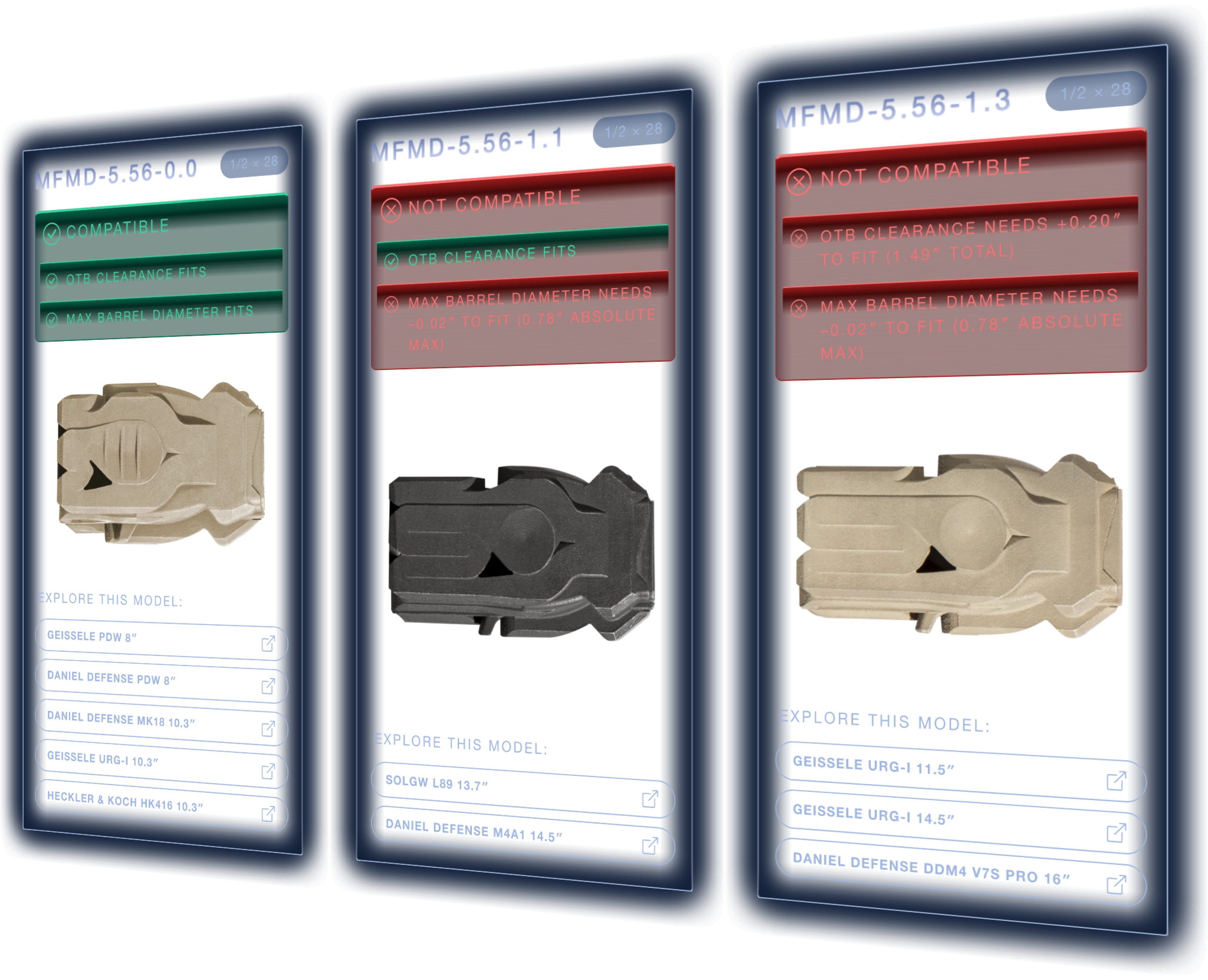
Our OTB Advantage
MFMD is built on a fundamentally different suppressor architecture.
Our Over-The-Barrel (OTB) design doesn’t just reduce overall length—it preserves barrel length, and barrel length preserves performance.
Traditional suppressors add length forward of the muzzle. To stay compact, users shorten barrels and accept losses in velocity, range, and effectiveness. Balance suffers. Handling suffers. Capability suffers.
OTB eliminates that forced compromise.
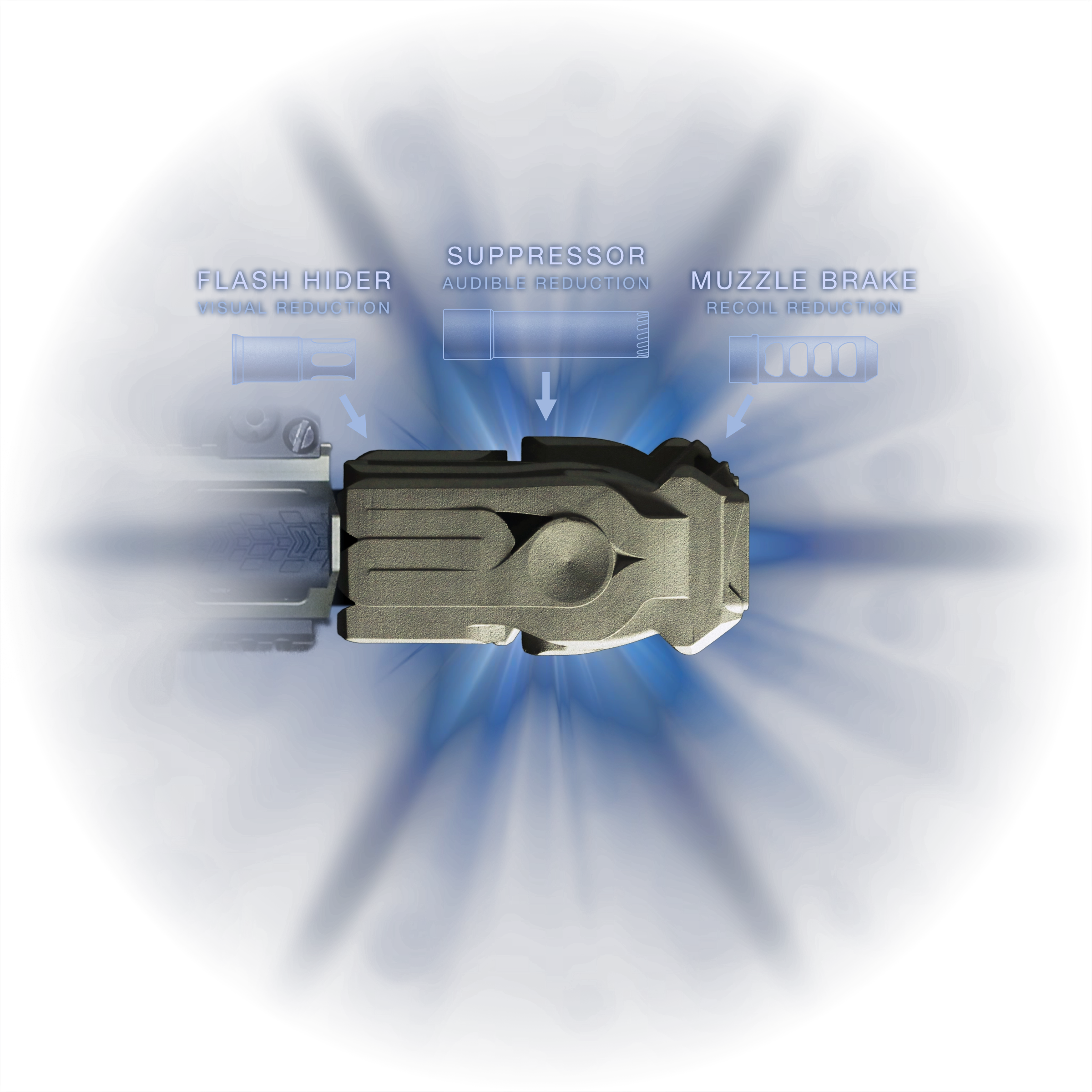
By shifting suppressor mass rearward over the barrel, OTB maintains a more favorable center of gravity than forward-mounted designs. Keeping weight closer to the center of the weapon reduces muzzle heaviness, improves handling, and results in a platform that is more controllable in any operational environment.
While our flush-mount systems require no OTB and remain extremely compact and effective, OTB-enabled configurations unlock the full performance envelope of MFMD.
What is OTB?
OTB (Over-The-Barrel) describes how much of the suppressor extends rearward over the barrel, rather than forward past the muzzle.
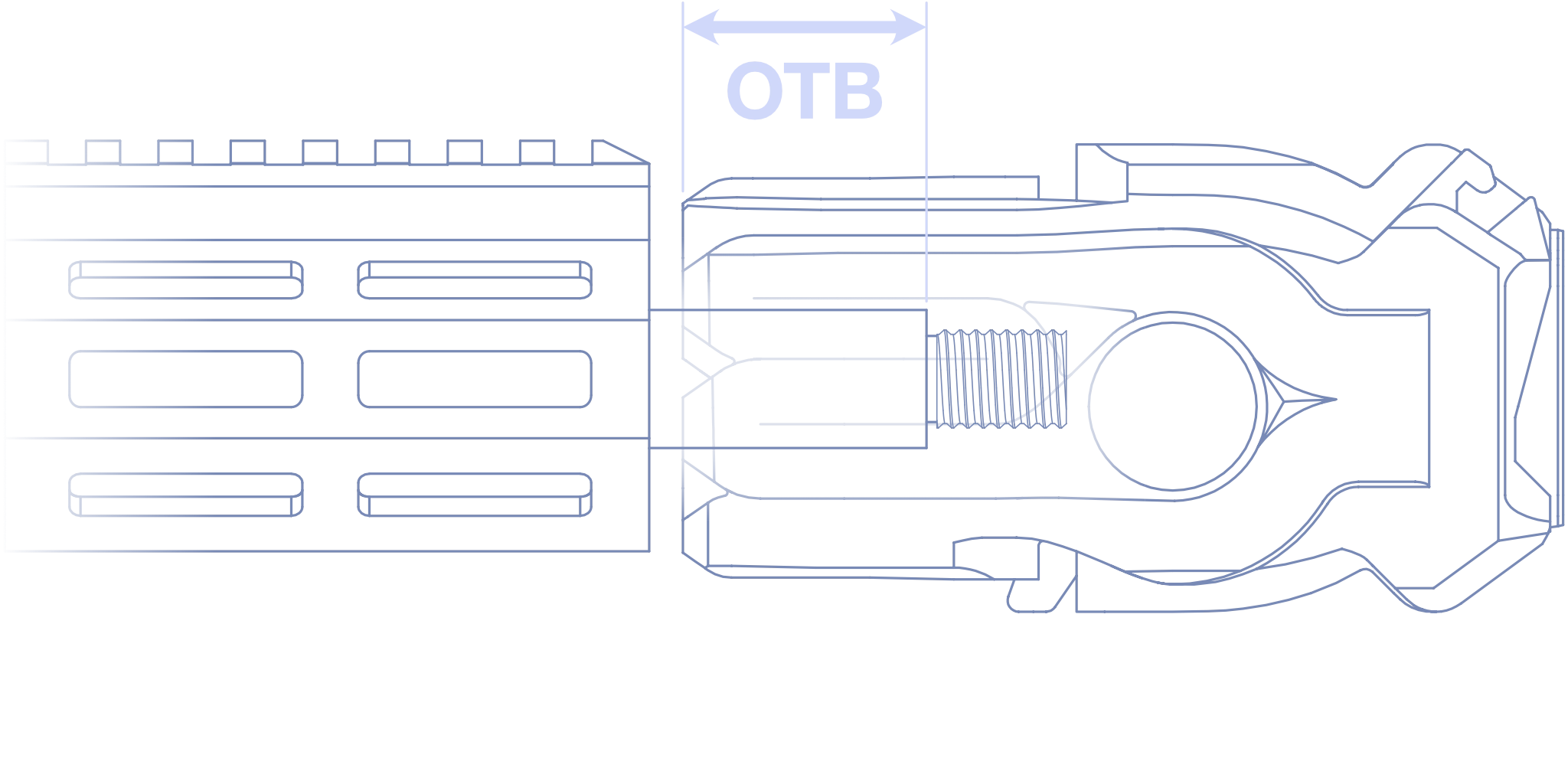
By overlapping the barrel, OTB reclaims length that would otherwise be added to the front of the weapon—allowing increased suppressor volume without increasing overall system length.
This is an architectural advantage, not a packaging trick.
Why OTB Matters
Barrel length directly affects weapon performance.
More barrel length provides:
- Higher muzzle velocity
- Improved ballistic consistency
- Greater effective range
- More reliable terminal performance
Forward-only suppressors force users to give that up to remain compact.
OTB allows the shooter to keep it.
For example, a 14.5″ barrel with an MFMD can match the overall length of a 10.3″ barrel with a conventional suppressor—while delivering significantly superior ballistic performance.
That advantage is not theoretical.
It is geometry and physics.
How OTB Is Measured
OTB is the portion of the suppressor that extends rearward over the barrel. It can be measured in multiple ways depending on barrel configuration.
For all configurations we recommend a minimum air gap of 3/16″ to 1/4″ between the rear of the suppressor and the handguard.
-
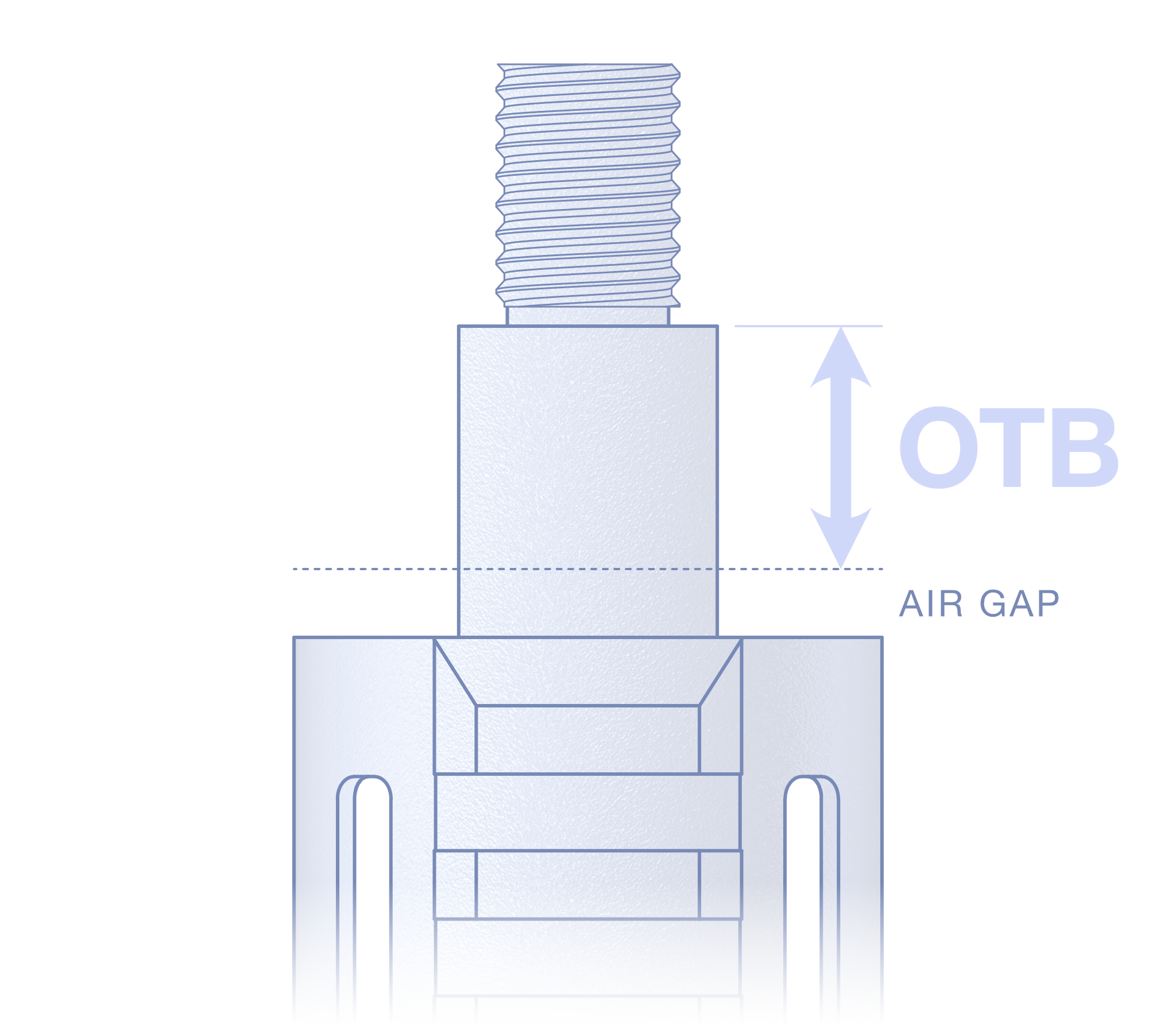
Shoulder Measurement
For barrels with a standard 90-degree shoulder, OTB is measured from the shoulder face rearward to the handguard.
-
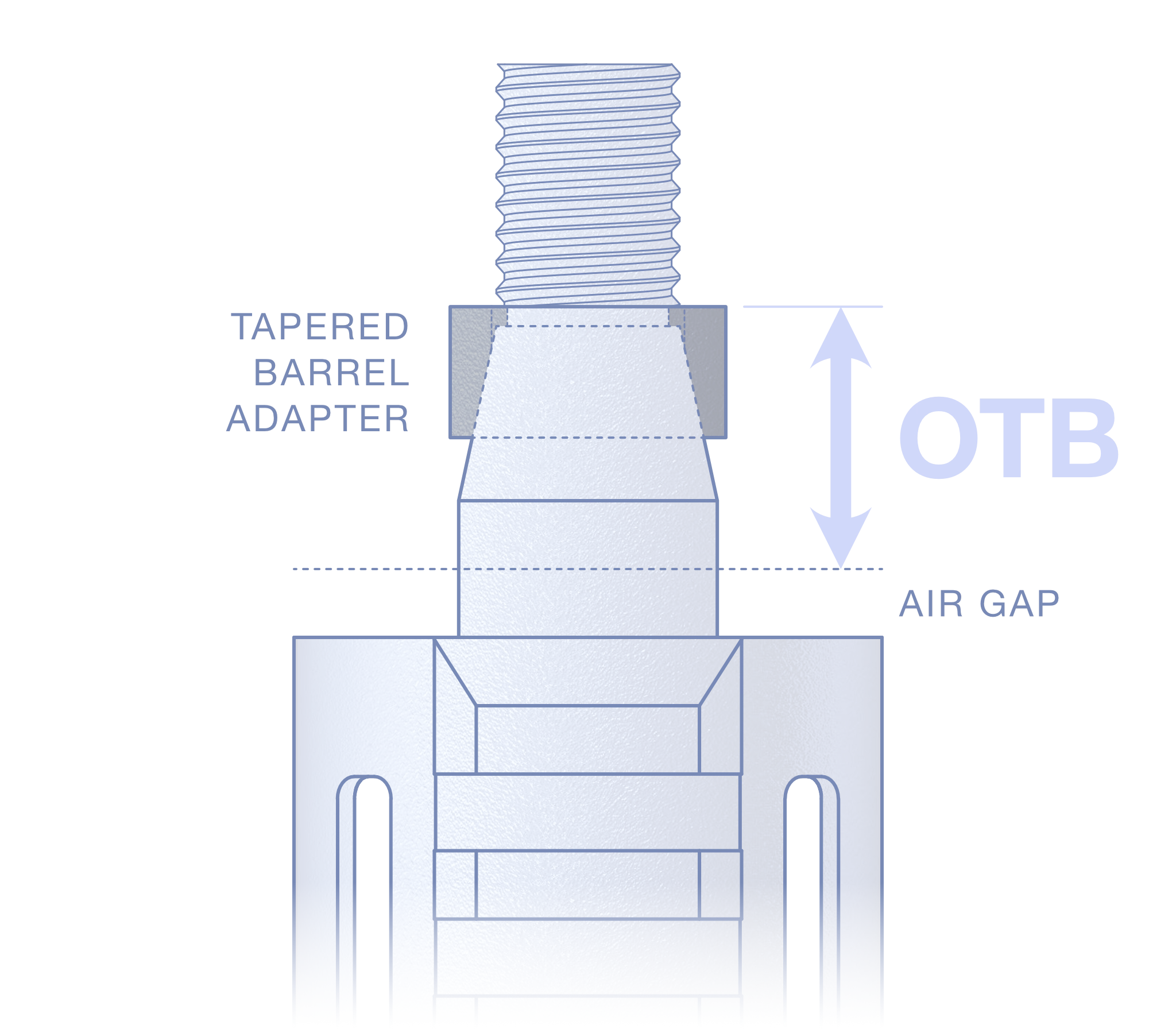
Tapered Barrel Measurement
For barrels with a tapered shoulder, OTB is measured from the end of the taper to the handguard. These barrels require the use of the provided Tapered Barrel Adapter.
-
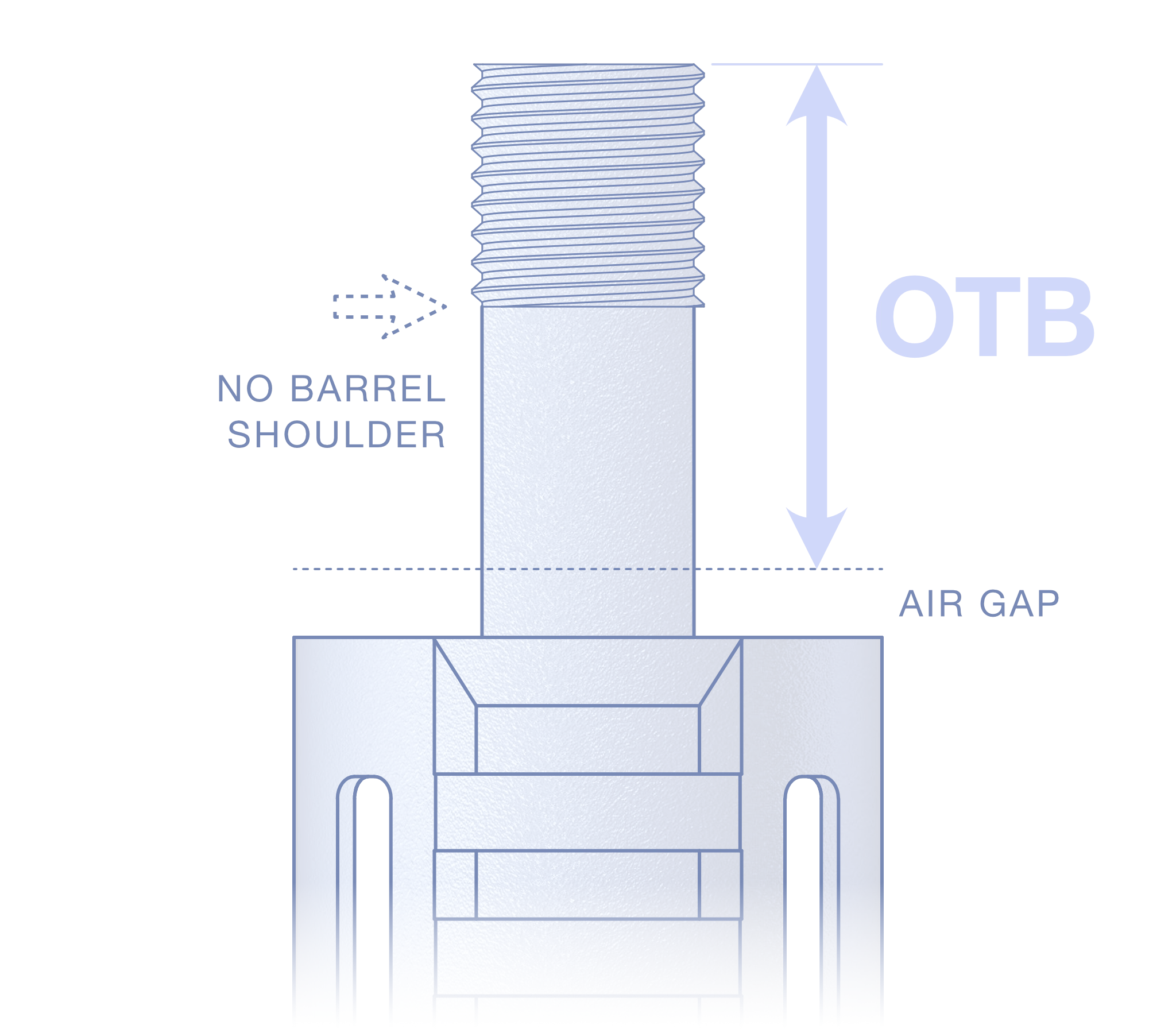
Crown Measurement
For barrels without a standard shoulder, OTB is measured from the crown rearward to the handguard.